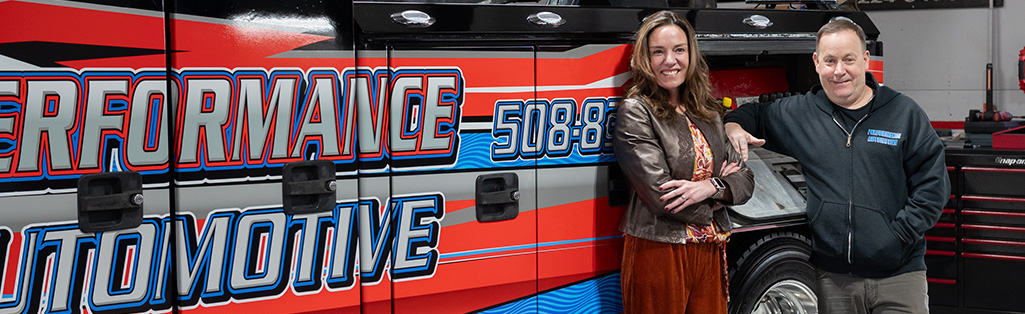

Chad Graybill’s business-ownership adventure started early. He was an engineering student at the University of Maine when his parents’ home in New Hampshire developed a foundation problem, and he discovered a solution using helical piles.
It was his first introduction to a business that supplied helical piles, which are, in essence, giant industrial screws that are placed deep into the ground to create solid foundations for structures. This experience, combined with several other foundation repair projects, led Graybill to begin working closely with Rimas Veitas. Together, they then co-founded Helical Drilling, a specialized geotechnical design build contracting business that serves customers across New England.
Over the years, Graybill and Veitas expanded Helical Drilling through a combination of organic growth and strategic mergers and acquisitions. About five years ago, they reached the crossroad familiar to successful entrepreneurs: succession planning.
Graybill and Veitas wanted to plan for retirement, and the pair began negotiating terms for the possibility that Graybill would buy his partner’s share of the business.
“It was a long process,” Graybill said. “And all along, I’m thinking, ‘I need to think about my succession plan.’”
He knew he wanted a smooth, organized transition and became less interested in buying out his partner. Instead, he wanted to give the 100 employees who helped grow Helical Drilling a chance to own a piece of the business.
“The culture of our company is homegrown,” Graybill said. “Our employees love working with Helical Drilling. The thought of some other company buying Helical was just not the culture.”
The idea for Helical Drilling’s employee stock ownership plan (ESOP) was born.
How an ESOP works
An employee stock ownership plan is a retirement benefit plan in which a trust holds company shares on behalf of participants and beneficiaries. To set one up, Helical Drilling created a trust, which then borrowed the money needed to buy the company from the two partners.
Helical Drilling worked with its long-time banking partner, Rockland Trust, for the financing. Over time, the company will repay the loan by making contributions to the trust, and employees will receive shares in the company as a retirement benefit.
Helical Drilling announced the ESOP to employees in May 2025. “They were excited but had many questions,” Graybill said. “Are there stock certificates? Does the company pay dividends on shares? Will they get to vote on management decisions?”
Those questions are common when businesses first introduce the idea of an ESOP, said Rockland Trust Senior Vice President and Corporate Banking Officer Phil Murphy. Helical Drilling’s existing employee-focused culture helped make it easy to address them, Murphy said.
“They think a lot about what their employees’ experience is going to be like, and they run a great business,” he said. “Those were two things that were driving characteristics for us to support them in their request to move to the ESOP structure.”
This spring, Helical Drilling employees will receive the initial valuation of their shares.
“That’s going to be the first time where people have something tangible to look at,” Graybill said. “I’ve had to set expectations. The value of the company will be low initially because of the debt and because the number of shares that get distributed is based on a very defined plan.
“I’ve had to explain, that over time, by everyone doing a good job, growing the company, helping us make the right decisions, saving money where we can, the value of the company will grow, debt will go down, and this could be a really good thing for you when you are retirement age or 10 years in the future.’”
Planning for a successful exit
ESOPs in their current form began in the 1970s but have remained relatively rare. There were 309 new ESOPs formed in 2023, the most recent year for which data is available, bringing the national total to 6,609 plans.
Murphy said he sees more business owners like Graybill considering the option as they approach retirement. More than half of all businesses with employees are owned by people age 55 or older, according to the U.S. Census Bureau.
Murphy and the corporate banking team at Rockland Trust evaluate multiple ESOP opportunities every year. They are complex transactions that act as a management buyout and a way for ownership to reward employees. Murphy recommends anyone considering an ESOP to focus on assembling a strong financial team that includes their banker, CPA, and an experienced ESOP consultant, along with the business’s internal finance leaders.
“To companies that aren't used to taking on debt, it can be a big step,” he said. “It can change how they evaluate their financial position and how they work with their lender. A big part of the success is choosing a partner like Rockland Trust, an institution that allows their lenders the capacity to form strong relationships with their clients.”
Ultimately, Graybill said, creating employee ownership is a win-win that makes the ESOP work worthwhile.
“This is the long game,” Graybill said he tells employees. “We have plenty of years to learn how it all works but just know that you’re growing the company for all of our futures.”